
Versão do artigo em português: Conectividade e segurança nas rodovias: NB-IoT na prática – a nova era do rastreamento inteligente, com mais eficiência, cobertura e escala
Connectivity and Highway Safety, taken to the Next Level: NB-IoT Gains Traction as an Alternative for Mobile Traceability.
Advances in connectivity technologies are expanding the possibilities for tracking and monitoring freight transportation, especially on highways, in rural areas, and in remote regions.
A recent article published by the Teletime portal discusses how NB-IoT has been gaining ground as an efficient alternative for mobile traceability applications, bringing new perspectives to the logistics and transportation sector.
Technological innovation is both a highly promising and challenging path. Understanding pain points and problems — “falling in love with the problem, not the solution,” as Uri Levine says — makes the path toward finding a solution much clearer.
In this article, BWS IoT’s outstanding development team — led by Flavio Fernandes, VP of Engineering, and Valter Chagas Junior, VP of Technology — shares its perspective on the topic. Enjoy the reading!
—
By Oswaldo Conti-Bosso, President
Flávio Fernades, VP of Engineering
Valter Chagas Junior, VP of Technology
At the end of January 2026, Brazil’s Ministry of Communications announced a policy aimed at expanding connectivity along federal highways. The initiative brings renewed attention to a long-standing — and still insufficiently resolved — issue: the existence of extensive stretches with little or no coverage, which affects road safety, emergency response, and the efficiency of logistics chains that depend on continuous communication.
According to the studies released, this is a plan expected to mature over the course of three to four years, with broader results projected for 2029/2030. As with any infrastructure project, the challenge lies less in the “announcement” and more in the “execution”: prioritizing highway stretches, ensuring coordination, securing investment, and allowing time for rollout.
Meanwhile, discussion is growing around complementary approaches capable of addressing part of the problem in the short and medium term — especially for use cases that require short messages, cost control, and predictable delivery, such as telemetry and traceability. It is in this context that NB-IoT technology moves to the center of the spotlight, now with a trend that has been gaining momentum: NB-IoT applied to mobility.
The coverage gap is not new — what is changing is how to address it.
Historically, connectivity outside major urban centers has always depended on difficult trade-offs: expanding infrastructure (costly and time-consuming), relying on satellite connectivity (not always viable for the economic profile of certain applications), or simply living with coverage gaps.
In recent years, however, the consolidation of networks built on NB-IoT infrastructure (LPWAN — Low-Power Wide-Area Network) has opened an interesting technical path for applications that do not require broadband — but do require range, penetration, and energy efficiency. LoRaWAN and NB-IoT have come to play an important role in this discussion; the market has been applying these technologies with greater maturity and proving that they work in the field, especially along long-haul routes.
NB-IoT: From a “Static” Technology to a Reality for the New Mobility
Narrowband IoT (NB-IoT) was born and elfestablished in predominantly static applications (such as meters, sensors, and monitoring systems). Over time, it was incorporated into 4G and 5G network specifications and now supports billions of connected devices worldwide.
What changes when mobility enters the equation is the complexity of the radio environment: varying coverage along routes, the need for consistent device behavior while in motion, handovers between cell towers, and the importance of maintaining message delivery with greater efficiency, broader coverage, and low power consumption.
That is why a new development approach is beginning to gain traction: combining NB-IoT with mobility-oriented algorithms and techniques to increase robustness in vehicle and asset traceability scenarios. The goal is to bring together two worlds: the efficiency of LPWAN and the real operational demands of assets in motion.
Existing Infrastructure: NB-IoT — An Underutilized Asset in Mobile IoT
One point that is often underestimated outside the sector is that IoT connectivity does not depend solely on “having signal,” but also on how that signal is used within low-power, long-range architectures.
In this context, there is growing discussion around how the NB-IoT infrastructure already deployed by carriers — and already available across a significant portion of the territory — can be better leveraged by applications that need to operate beyond the “ideal coverage map.” This does not replace structural infrastructure investments, but it can serve as a complementary layer for specific use cases.
What Field Tests Prove: Range, Power Consumption, and Resilience
Practical field experiences with mobile NB-IoT trackers highlight three aspects that help explain the market’s growing interest:
1) Range and penetration
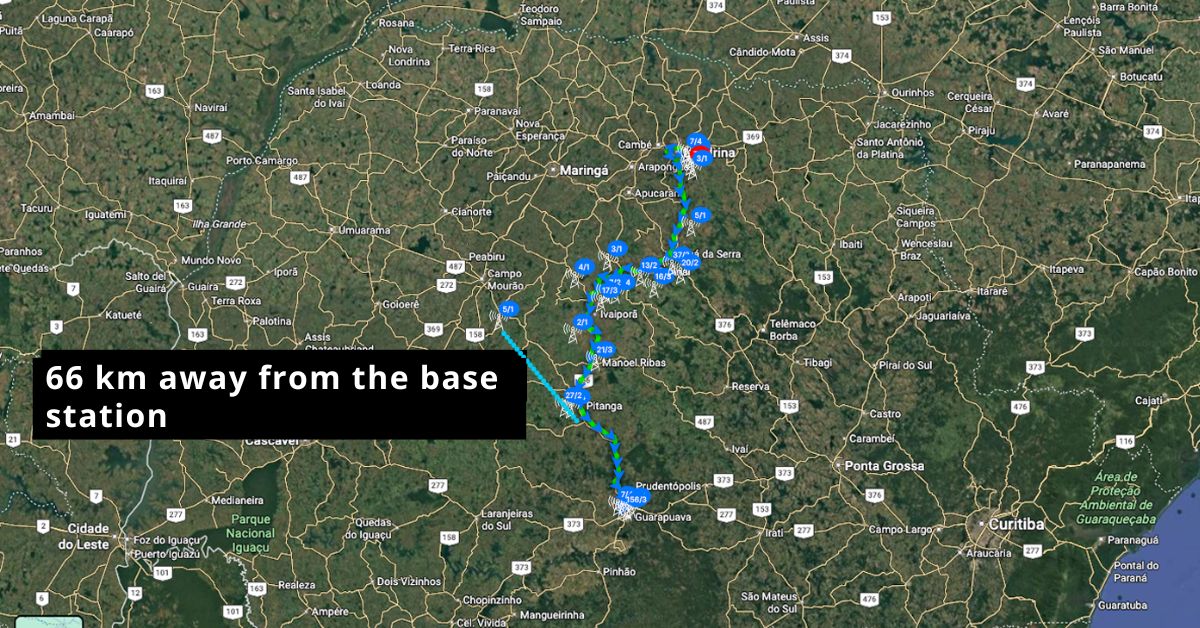
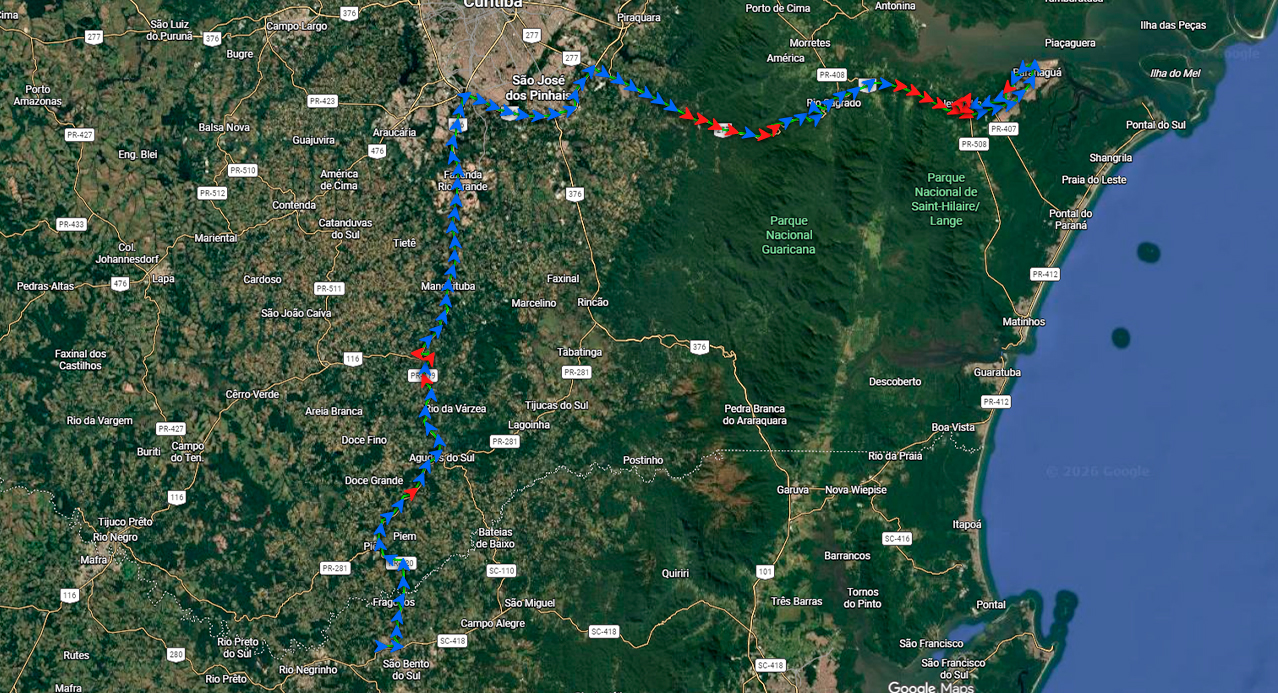
In validations carried out in remote regions, there have been recorded instances of communication between the device and the base station over distances of several dozen kilometers — in one case, reaching 66.14 km.
2) Operational resilience along routes
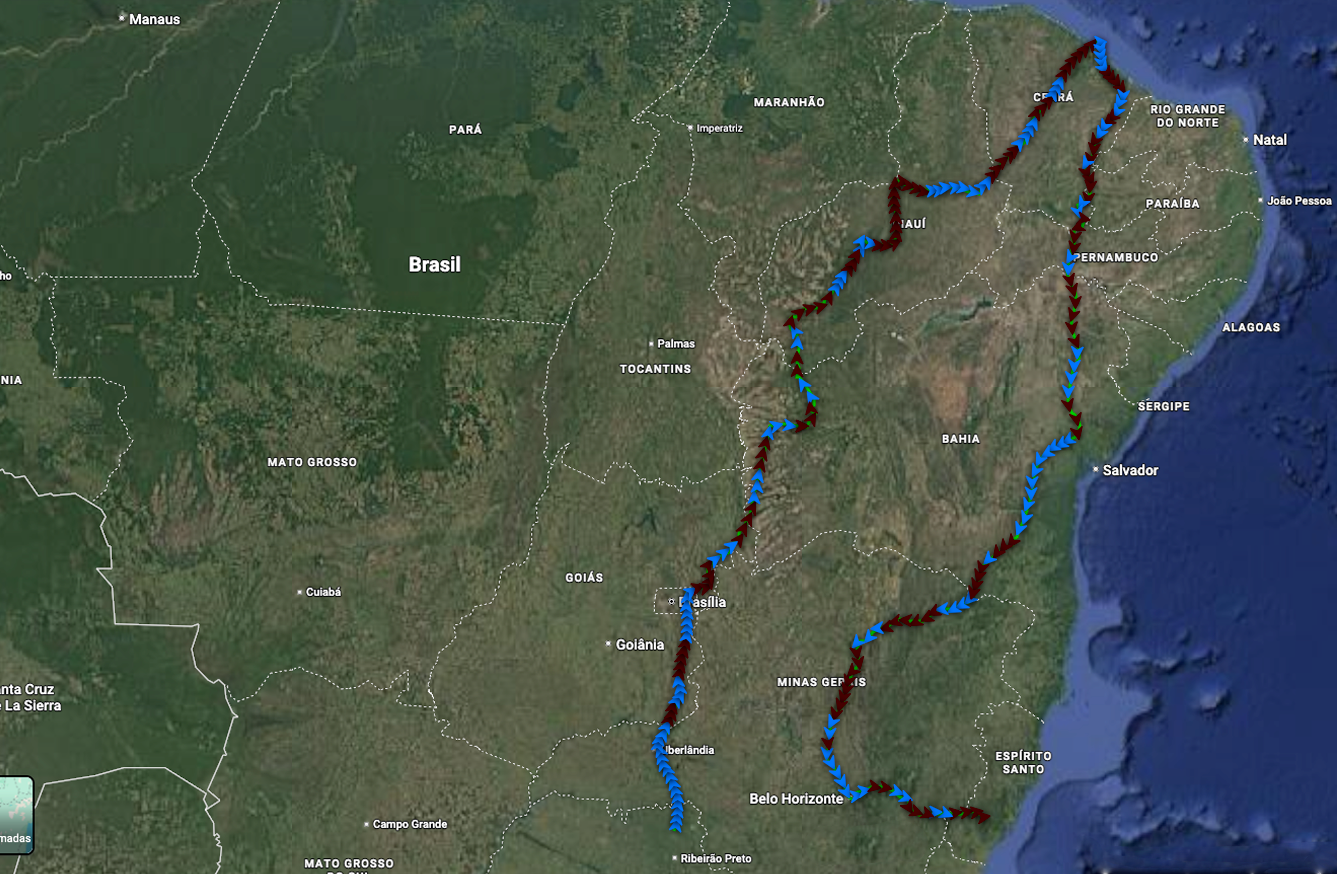
Along long routes that cross different states and coverage profiles, it is common to observe an alternation between messages sent online and messages logged offline (stored and transmitted once reconnection occurs).
This behavior is expected in environments with varying coverage and can be managed through application logic (buffering, retransmission policies, and transmission windows).
3) Energy efficiency as an architectural differentiator
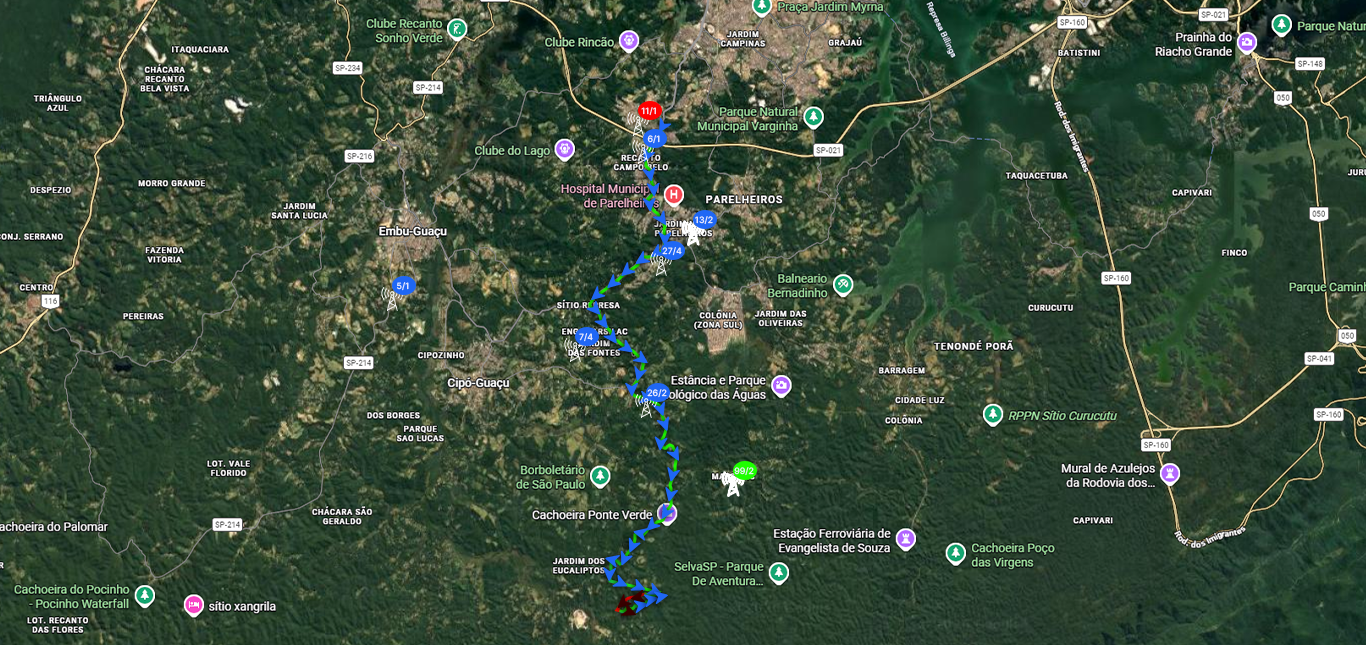
For traceability purposes, power consumption is a direct component of total operating cost, especially in autonomous devices. In field measurements, very low results have been observed, such as:
- 350 μAh (0.35 mAh) in devices powered by light and heavy vehicles
- 10 μAh (0.01 mAh) in autonomous devices (battery-powered only)
In practice, this tends to favor operating models with greater autonomy, less maintenance, and asset traceability of projects involving assets that remain in transit or in remote areas for long periods.
LPWAN Redundancy: LoRaWAN as a Complementary Technology in Critical Scenarios
Another trend that is emerging strongly in real-world projects is the combination of LPWAN technologies within hybrid architecture. In critical operations, it makes sense for connectivity to have “backup plans” to handle failures, interference, and exceptional situations.
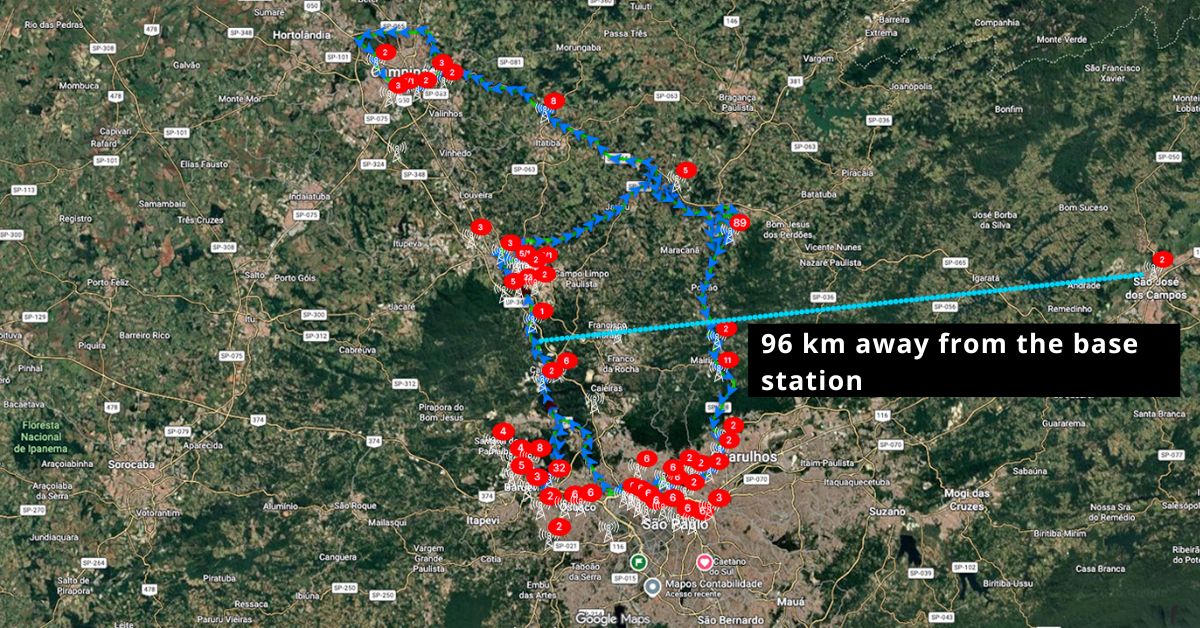
In this model, LoRa technology can serve as a complementary layer — through LoRaWAN (public network) and LoRa P2P (device-to-device) — including in scenarios where intentional interference is suspected (such as the use of blockers/jammers). In field validations, there have been recorded LoRaWAN transmissions over distances of up to 96 km.
The trend is to combine infrastructure, rollout timelines, and complementary solutions.
Expanding connectivity along Brazilian highways is an important and necessary step. But from a technological standpoint, the market has been pointing toward an increasingly pragmatic approach: combining long-term structural projects with short-term complementary solutions for specific use cases.
In this context, the evolution of NB-IoT for mobile tracking — especially when applied to mobility use cases — is likely to gain ground by bringing together the attributes that matter most in the field: range, penetration, energy efficiency, and operational robustness. For traceability and telemetry on remote routes, this discussion is no longer merely theoretical; it is becoming a practical innovation agenda.
Media coverage:
- Teletime: Conectividade nas rodovias: NB-IoT ganha tração como alternativa para rastreabilidade móvel

